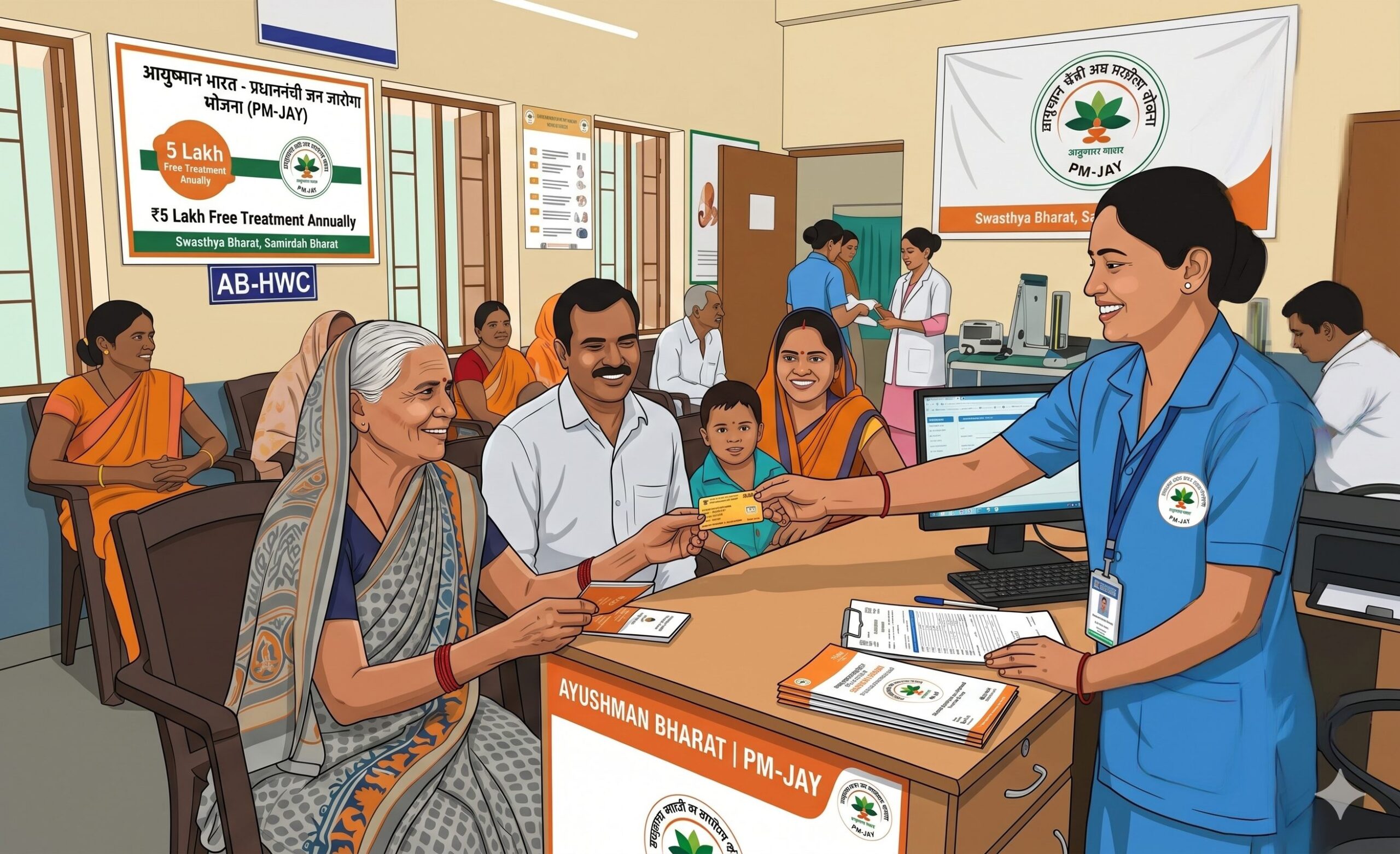
Ayushman Bharat-PMJAY has definitely moved the needle. It covers 42+ crore people and helped cut household out-of-pocket health spending from 64% in 2013-14 to about 39% in 2021-22. But families still go bankrupt after hospital visits. Here’s why the safety net has holes:
1. Hospitals aren’t getting paid, so they’re backing out: –
There’s a ₹1.21 lakh crore backlog in dues to empaneled hospitals. When payments get delayed for months, private hospitals suspend PMJAY services or exit the scheme. That pushes patients toward full-price private care or overstretched public hospitals. Coverage on paper doesn’t help if no hospital near you accepts the card.
2. Fraud crackdowns shrink the network:-
To stop fake billing, the govt has rejected 3.56 lakh claims worth ₹643 crore and de-empanelled 1,114 hospitals. Necessary, but it means fewer trusted hospitals for genuine patients. Plus, fraud checks can slow down legit claim approvals too.
3. The budget can’t keep up with medical inflation: –
PMJAY got ₹9,406 crore for 2025-26, up 29% from last year. Sounds good, until you factor in 14% annual medical inflation and the fact that total health spending is still under 2% of GDP vs the 2.5% target set by National Health Policy 2017. The ₹5 lakh cover per family is also getting eaten up faster by ICU costs, implants, and cancer drugs.
The missing-middle problem: PMJAY targets the bottom 40% of families. Many lower-middle-class households earn too much to qualify but too little to afford private insurance or a major hospital bill. And the scheme doesn’t cover outpatient care, medicines, or diagnostics, which make up a big chunk of routine health spending.
So it’s not that PMJAY isn’t working. It is, for millions. But payment delays, fraud fallout, and underfunding mean it can’t fully shield people from catastrophic bills yet.